
Foil Flex vs Rigid Dryer Duct: Which Is Better?
Smooth rigid or semi-rigid metal duct is the preferred choice for a dryer vent, because lint slides through it and it resists crushing. Thin foil accordion duct is ridged and crushable, and plastic or vinyl duct should be replaced. Check your dryer manual and local code for what is allowed.
The four duct types side by side
The duct between your dryer and the outside does one job: move hot, moist, lint-laden air out of the house. How well it does that depends a lot on the material. Here is how the common types compare in homes we work in.
| Type | Where it works | Drawbacks | Cleaning |
|---|---|---|---|
| Rigid metal | The main run through walls, ceilings and out the house | Takes more time to install and cut to fit | Smooth inside, so lint releases easily |
| Semi-rigid metal flex | Short connection from the dryer to the wall | Ridges hold some lint; can dent | Fairly easy when kept short |
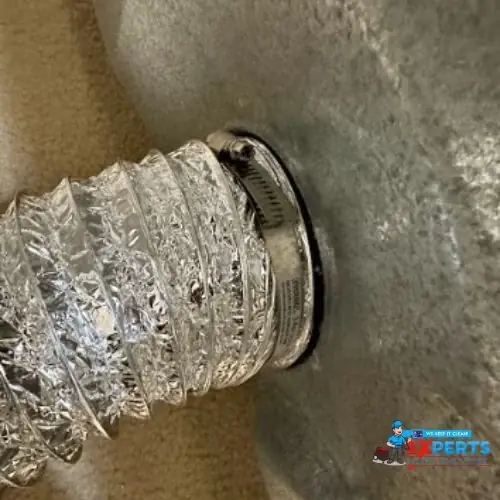
| Foil flex (thin accordion) | Best avoided; at most a short connection, and only if your dryer manual and local code allow it | Easy to crush or kink; ridges catch lint; tears | Harder to clean well |
| Plastic or vinyl flex | Not recommended anywhere | Can sag, trap lint and degrade with heat | Plan to replace it |
Flexible duct is not wrong everywhere, but thin foil and plastic are the weak links. The trouble usually starts when the wrong type ends up in the wrong spot because it was the quickest fix on installation day.
Why the shape of the duct matters
Air moves best through a smooth, straight pipe. Every ridge, sag or bend slows it a little, and slow air drops lint. That is why a ridged foil hose can look clean at the ends and still be packed with lint in the middle.
A crushed duct behind the dryer is one of the most common causes of a slow machine, and it is on the checklist in why your dryer takes two cycles. Dryers get pushed back flush against the wall, and a soft hose folds like a straw. Rigid metal does not.
Length matters as much as material. The longer the duct and the more turns it takes, the harder the dryer has to push, and the sooner lint settles. A short, straight run of any decent duct beats a long, twisting run of the best one.
Which one belongs where
A sensible setup uses rigid metal for the main run and, only if your manual and local code allow it, a short length of semi-rigid metal flex for the final connection between the dryer and the wall. Fewer joints and fewer elbows are better, and so is the shortest path to the outdoors.
- Use rigid metal wherever the duct is hidden in a wall or ceiling.
- Keep any flexible section as short and straight as possible.
- Secure joints with clamps, and keep the outside hood free of covers that clog with lint.
- Avoid screws that stick into the duct, because lint catches on them.
Rules differ on what is allowed, and your dryer's manual and local building code come first. We can describe what we see, but we are not a substitute for the code in your town.
Two federal sources point the same way. A U.S. Department of Energy weatherization job aid calls for rigid or semi-rigid metal duct, a run as short and straight as possible, fasteners that do not poke into the duct, and an outside termination with a damper and no cage. A U.S. Fire Administration report advises replacing coiled-wire foil or plastic venting with rigid, non-ribbed metal duct.
Pennsylvania basements and finished lower levels often hide the duct behind drywall or above a ceiling. If yours does, that is the section that deserves solid metal, because it is the hardest part to reach later. Shared-wall homes have their own version of this, covered in rowhome and twin dryer vents.
What to do if you have foil or plastic now
Do not panic, but do not ignore it either. Thin foil accordion duct is the weak link, and plastic or vinyl duct should be replaced. Ask what your dryer manual and local code allow, and plan on smooth metal duct.
Look for crushed spots, tears, sagging loops and loose connections; our real jobs page has photos of flexible dryer hoses from our own visits. If you see any, or you cannot see the whole duct, ask for an estimate. We will tell you what is there and whether a dryer vent cleaning is enough or the duct should be swapped. We are based in Huntingdon Valley, so dryer vent cleaning in Huntingdon Valley is home turf.
Quick answers
Is foil flex dryer duct a good choice?
Thin foil flex is not the best choice. Rigid or semi-rigid metal duct is preferred, and a short transition piece may be allowed only if your dryer manual and local code say so. Long runs of ridged foil collect lint and crush easily, so smooth rigid metal is the better choice.
Can you clean plastic or vinyl dryer duct?
We would not rely on it. Plastic duct tends to sag and trap lint, and it is not made for dryer heat. The sensible fix is replacing it with metal duct instead of cleaning it.
How can I tell what type of duct I have?
Look behind the dryer, or at any visible section. Smooth metal that rings when tapped is rigid. A bendy tube with a thin shiny skin is foil flex. A clear or white ribbed tube is plastic or vinyl.
Sources
Next step
Want the vent checked? The estimate is free, and we will tell you plainly what the vent run needs.
Dryer vent cleaning in towns we serve
Related guides
- Dryer vents
How Often Should You Clean a Dryer Vent?
A common rule of thumb is once a year, then adjust. Big households, pet owners, long or bendy vent runs and foil ducts usually need it sooner. A lightly used dryer on a...
- Dryer vents
Signs Your Dryer Vent Is Clogged (and What to Check)
A clogged dryer vent usually shows up as loads that need two cycles, clothes that come out hot but still damp, a warm or musty laundry room, and an outside flap that...
- Dryer vents
Rowhome and Twin Dryer Vents: Layout Problems, Fixes
Rowhomes and twins have few exterior walls, so dryer vents often run long and bend around corners to reach one. Long runs, tight turns and crushed foil duct trap lint....